
Battery thermal-isolation materials
Aerogel Barrier Pads for Battery Design
Converted pads and barriers for cell, module and pack evaluation within a defined validation plan.

A material supports the design. It does not guarantee the system.
Thermal-isolation pads require validation in the relevant cell, module or pack construction.
Where converted barriers may be evaluated
Geometry, compression, interfaces and assembly conditions differ across every placement.
Cell-to-cell
Thin barriers considered with cell spacing, compression, electrical interfaces and assembly tolerance.
Module separation
Larger formats reviewed against structure, fastening, vibration, ageing and available space.
Pack interfaces
Barrier constructions coordinated with enclosure, cooling, sealing and service requirements.
Electronic protection
Converted insulation parts for heat-sensitive components, subject to system-specific validation.
Prototype kits
Revision-controlled die-cut parts, lamination, adhesive integration, identification and kitting.
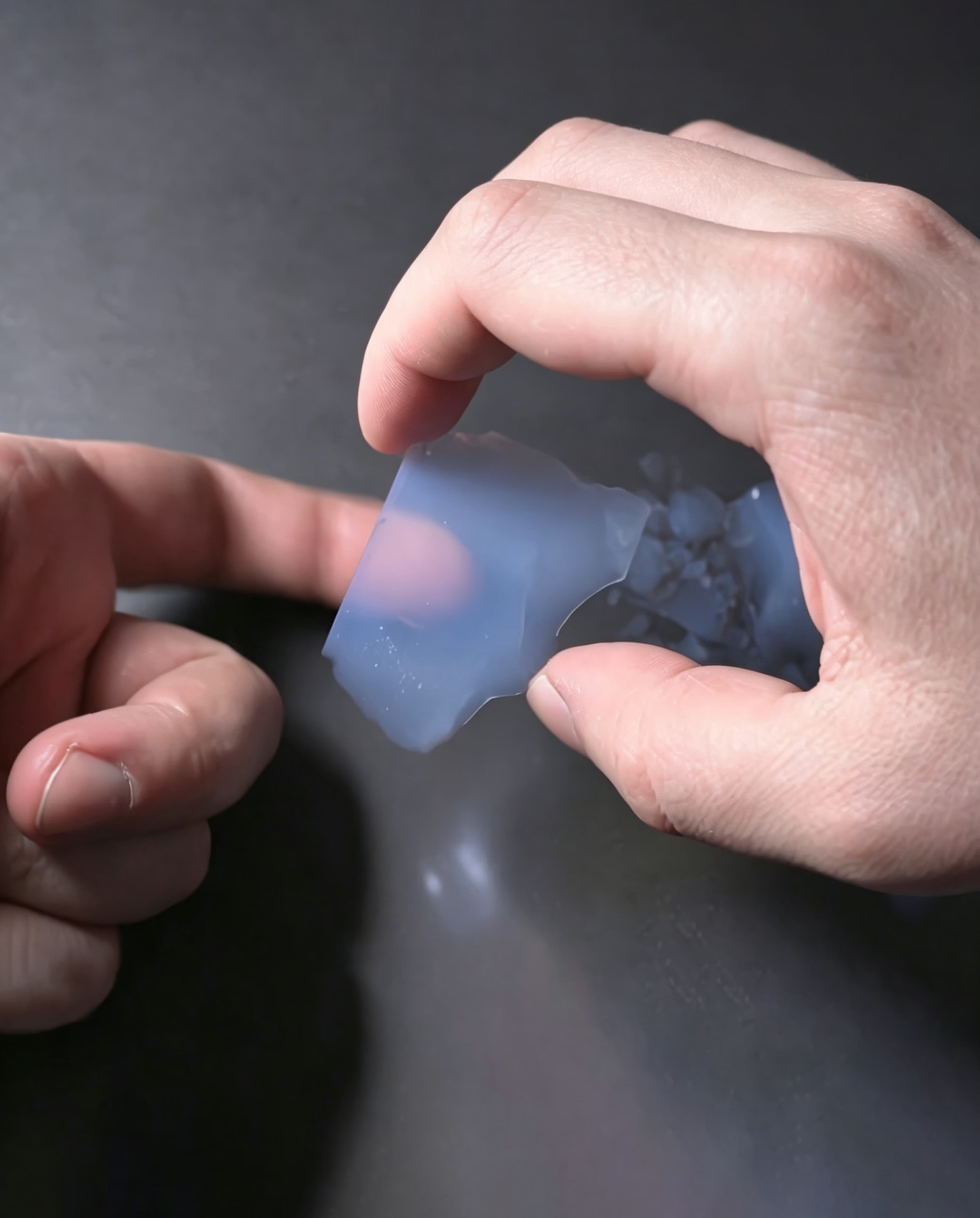
Prototype parts must match the assembly
Representative samples should use the intended material, thickness, conversion and installed condition.
- Control drawing revision and tolerance
- Record lamination and adhesive construction
- Evaluate compression and interfaces
- Retain the approved sample reference
Design inputs before die-cutting
The drawing is only one part of the requirement. Material state and assembly conditions must also be controlled.
Geometry
Drawing revision, thickness, cut profile, tolerance and edge condition.
Compression
Installed gap, pressure, recovery and ageing conditions.
Interfaces
Adhesive, film, electrical isolation, cooling and neighbouring materials.
Validation
Thermal, fire, electrical, vibration and ageing tests defined by the buyer.
A controlled prototype path
Revision control matters from the first sample through production release.
Define
Application and interfaces
Match
Material and supplier
Convert
Prototype to drawing
Test
Representative assembly
Freeze
Approved revision
Scale
Controlled production
Start with the assembly and test plan
Send drawings, compression conditions, interfaces, quantity, test method and destination.